I've just started putting together a new web site at:-
http://www.funeralchoices.co.uk
I have only hosted the home page so far and would appreciate any advice, ideas and comments. I will be adding more over the next few weeks and I will put a post on here when I feel the site may be worth re-visiting.
Saturday, 10 October 2009

More on "Bluehenge"

This is an artists impression provided by the University of Manchester, Tuesday, Oct. 6, 2009, of the Blue Stonehenge in western England. The drawing shows how scientists believe the “Blue Stonehenge” discovered by a team of archaeologists on the west bank of the River Avon in September 2009 may have looked. Researchers say a new find near the famous Stonehenge monument shows the religious significance of the site. The smaller prehistoric site is being called "Bluehenge" because of the color of the stones that were placed there thousands of years ago but have since disappeared. All that is left are the holes made when the stones were put in place. Researchers believe the newly discovered stone circle and the larger Stonehenge circle may mark a "domain of the dead" that was linked to the "domain of the living" by the River Avon. Experts say the stones were incorporated into the circle in about 2,500 B.C
Friday, 9 October 2009
Find: Stonehenge could be part of funeral complex
LONDON — The discovery of a small prehistoric circle of stones near Stonehenge may confirm the theory that the mysterious monument in southwest England was part of a massive funeral complex built around a river, researchers said Tuesday.
The new find shows that the second stone circle — dubbed "Bluehenge" because it was built with bluestones — once stood next to the River Avon about 1.75 miles (2.8 kilometers) from Stonehenge, one of Britain's best loved and least understood landmarks.
The find last month could help prove that the Avon linked a "domain of the dead" — made up of Stonehenge and Bluehenge — with an upstream "domain of the living" known as Durrington Wells, a monument where extensive signs of feasting and other human activity were found, said Professor Julian Thomas, co-director of the Stonehenge Riverside Project.
Project director Mike Parker Pearson said it is possible that Bluehenge was the starting point of a processional walk that began at the river and ended at Stonehenge, the site of a large prehistoric cemetery.
"Not many people know that Stonehenge was Britain's largest burial ground at that time," he said. "Maybe the bluestone circle is where people were cremated before their ashes were buried at Stonehenge itself."
There were very few signs of human life found around Stonehenge and Bluehenge, researchers said, lending credence to the idea that it was used as a funeral site, especially since there were signs that many human beings were cremated there.
A five-university team has been excavating the greater Stonehenge site since 2003 in a bid to unravel its meaning and use.
"This find certainly confirms the idea we've put forward that the river is of fundamental importance and links everything," Thomas said. "Everything is related to the river. That suggests that even before Neolithic time it may have had spiritual or religious significance. This find enhances the idea that all the monuments in this landscape are linked in various ways."
Researchers did not find the actual stones used to mark the smaller circle found by the river, but they did find holes left behind when the stones were removed.
The scientists believe the massive stones used for Bluehenge were dragged from the Welsh mountains roughly 150 miles (240 kilometers) away. There were clear indications that the gigantic stones from the Bluehenge site were later removed whole for use in the construction of Stonehenge, Thomas said.
They hope to use radiocarbon dating techniques to better pinpoint construction dates.
Stonehenge, a UNESCO World Heritage site, is a favorite with visitors from throughout the world and has become popular with Druids, neo-Pagans and New Agers who attach mystical significance to the strangely-shaped circle of stones, but there remains great debate about the actual purpose of the structure.
Rare excavation work at the actual Stonehenge site was begun last year in a coordinated effort to unearth materials that could be used to establish a firm date for when the first set of bluestones was put in place there.
The new find shows that the second stone circle — dubbed "Bluehenge" because it was built with bluestones — once stood next to the River Avon about 1.75 miles (2.8 kilometers) from Stonehenge, one of Britain's best loved and least understood landmarks.
The find last month could help prove that the Avon linked a "domain of the dead" — made up of Stonehenge and Bluehenge — with an upstream "domain of the living" known as Durrington Wells, a monument where extensive signs of feasting and other human activity were found, said Professor Julian Thomas, co-director of the Stonehenge Riverside Project.
Project director Mike Parker Pearson said it is possible that Bluehenge was the starting point of a processional walk that began at the river and ended at Stonehenge, the site of a large prehistoric cemetery.
"Not many people know that Stonehenge was Britain's largest burial ground at that time," he said. "Maybe the bluestone circle is where people were cremated before their ashes were buried at Stonehenge itself."
There were very few signs of human life found around Stonehenge and Bluehenge, researchers said, lending credence to the idea that it was used as a funeral site, especially since there were signs that many human beings were cremated there.
A five-university team has been excavating the greater Stonehenge site since 2003 in a bid to unravel its meaning and use.
"This find certainly confirms the idea we've put forward that the river is of fundamental importance and links everything," Thomas said. "Everything is related to the river. That suggests that even before Neolithic time it may have had spiritual or religious significance. This find enhances the idea that all the monuments in this landscape are linked in various ways."
Researchers did not find the actual stones used to mark the smaller circle found by the river, but they did find holes left behind when the stones were removed.
The scientists believe the massive stones used for Bluehenge were dragged from the Welsh mountains roughly 150 miles (240 kilometers) away. There were clear indications that the gigantic stones from the Bluehenge site were later removed whole for use in the construction of Stonehenge, Thomas said.
They hope to use radiocarbon dating techniques to better pinpoint construction dates.
Stonehenge, a UNESCO World Heritage site, is a favorite with visitors from throughout the world and has become popular with Druids, neo-Pagans and New Agers who attach mystical significance to the strangely-shaped circle of stones, but there remains great debate about the actual purpose of the structure.
Rare excavation work at the actual Stonehenge site was begun last year in a coordinated effort to unearth materials that could be used to establish a firm date for when the first set of bluestones was put in place there.
Wednesday, 7 October 2009
Edgar Allan Poe finally getting proper funeral

BALTIMORE — For Edgar Allan Poe, 2009 has been a better year than 1849. After dozens of events in several cities to mark the 200th anniversary of his birth, he's about to get the grand funeral that a writer of his stature should have received when he died.
One hundred sixty years ago, the beleaguered, impoverished Poe was found, delirious and in distress outside a Baltimore tavern. He was never coherent enough to explain what had befallen him since leaving Richmond, Va., a week earlier. He spent four days in a hospital before he died at age 40.
Poe's cousin, Neilson Poe, never announced his death publicly. Fewer than 10 people attended the hasty funeral for one of the 19th century's greatest writers. And the injustices piled on. Poe's tombstone was destroyed before it could be installed, when a train derailed and crashed into a stonecutter's yard. Rufus Griswold, a Poe enemy, published a libelous obituary that damaged Poe's reputation for decades.
But on Sunday, Poe's funeral will get an elaborate do-over, with two services expected to draw about 350 people each — the most a former church next to his grave can hold. Actors portraying Poe's contemporaries and other long-dead writers and artists will pay their respects, reading eulogies adapted from their writings about Poe.
"We are following the proper etiquette for funerals. We want to make it as realistic as possible," said Jeff Jerome, curator of the Poe House and Museum.

Advance tickets are sold out, although Jerome will make some seats available at the door to ensure packed houses. Fans are traveling from as far away as Vietnam.
The funeral is arguably the splashiest of a year's worth of events honoring the 200th anniversary of Poe's birth. Along with Baltimore — where he spent some of his leanest years in the mid-1830s — Poe lived in or has strong connections to Boston, New York, Philadelphia and Richmond.
With the funeral angle covered, the Edgar Allan Poe Museum in Richmond staged a re-enactment last weekend of his death. Those with a more academic interest in Poe can attend the Poe Studies Association's annual conference from Thursday through Sunday in Philadelphia.
Visitors in Baltimore for the funeral can enjoy a new exhibit at the Baltimore Museum of Art, "Edgar Allan Poe: A Baltimore Icon," which includes chilling illustrations to "The Raven" by Edouard Manet.
Baltimore has a decided advantage over the other cities that lay claim to Poe, notes BMA director Doreen Bolger. "We have the body," she said.
This week, that's true in more ways than one. Jerome said he's gotten calls from people who thought he was going to exhume Poe's remains and rebury them.
"When they dug up Poe's body in 1875 to move it, it was mostly skeletal remains," Jerome said. "I've seen remains of people who've been in the ground since that time period, and there's hardly anything left."
Instead, Jerome commissioned local special-effects artist Eric Supensky to create an eerily lifelike — or deathlike — mock-up of Poe's corpse.
"I got chills," Jerome said Monday upon seeing the body for the first time. "This is going to freak people out."
The body will lie in state for 12 hours Wednesday at the Poe House, a tiny rowhome in a gritty section of west Baltimore. Visitors are invited to pay their respects.
Following the viewing will be an all-night vigil at Poe's grave at Westminster Burying Ground. Anyone who attends will have the opportunity to deliver a tribute.
On Sunday morning, a horse-drawn carriage will transport the replica of Poe's body from his former home to the graveyard for the funeral.
Actor John Astin, best known as Gomez Addams on TV's "The Addams Family," will serve as master of ceremonies.
"It's sort of a way of saying, 'Well, Eddie, your first funeral wasn't a very good one, but we're going to try to make it up to you, because we have so much respect for you,'" said Astin, who toured as Poe for years in a one-man show.
The service won't be a total lovefest, however. The first eulogy will come from none other than Griswold.
"People are asking me, 'Jeff, why are you inviting him? He hated Poe!'" Jerome said. "The reason is, most of these people defended Poe in response to what he said about Poe's life, so we can't have this service without having old Rufus sitting in the front row, spewing forth his hatred."
Eulogies will follow from actors portraying, among others, Sarah Helen Whitman, a minor poet whom Poe courted after his wife's death, and Walt Whitman, who attended the dedication of Poe's new gravestone in 1875 but didn't feel well enough to speak. Writers and artists influenced by Poe, including Arthur Conan Doyle and Alfred Hitchcock, will also be represented.
Jerome expects to cry — one reason he won't be speaking. Even his rivals are impressed with the scale of the tribute.
"Annoyed as I am with Baltimore sometimes, I have to give them credit," said Philadelphia-based Poe scholar Edward Pettit, who argues his city was of greater importance to Poe's life and literary career. "Baltimore has done an awful lot to maintain the legacy of Poe over the last 100-some years."
Thursday, 1 October 2009
Two feet in the grave
I've added the Open University booklet that accompanied the programme on BBC1 with Richard Wilson. It's actually not a bad read!!!!
http://www.funeralhelp.co.uk/Downloads.html
http://www.funeralhelp.co.uk/Downloads.html
Please have a look.
I have just added something I feel is very important to the following pages on our site.
http://www.funeralhelp.co.uk/Green%20Funerals.html
http://www.funeralhelp.co.uk/eForests.html
Please have a look and sign up if you feel it's worthwhile.
Thanks,
Nick
http://www.funeralhelp.co.uk/Green%20Funerals.html
http://www.funeralhelp.co.uk/eForests.html
Please have a look and sign up if you feel it's worthwhile.
Thanks,
Nick
Friday, 25 September 2009
People's ashes left uncollected for years
The Canterbury Star
City crematoriums and funeral directors are storing the cremated remains of hundreds of people whose relatives fail to collect them.
The macabre reality of uncollected ashes is part of a national trend, with some firms in the country holding the remains of up to 1000 people.
Many funeral directors are now being forced to put measures in place to ensure they are not holding onto ashes for families for long periods of time.
In Christchurch, crematoriums storing ashes include the Canterbury Crematorium in Linwood, which currently stores 545 sets of ashes, and the Harewood Memorial Gardens and Crematorium, which holds 488.
Most funeral directors in the city could also hold anywhere from 10 to 100 sets of ashes they have collected for families at any one time.
Nationally, between 60% and 70% of people are now cremated rather than buried.
Funeral Directors’ Association vice president Tony Garing, from John Rhind Funeral Directors in Christchurch, said the number of ashes left uncollected was astounding.
He said the onus was on the families to make a decision about what to do with the ashes, and many funeral directors would often collect ashes from the crematoriums on the relatives’ behalf.
However, because of the logistics of storing large numbers of ashes, many funeral directors were now not collecting them unless they had clear instructions what to do with them.
Mr Garing said they currently held well over 100 sets of ashes in their storeroom, some dating to the 1960s.
“If you went to any funeral home you would find ashes,” he said. “It’s a very emotive thing, that’s the problem.
“It is also very hard to contact families. Many (contacted) think it was dealt with years ago.”
Cremation Society of Canterbury manager Barbara Terry said common reasons for people failing to collect “cremains” was that it was too traumatising, the deceased had no relatives or friends left, or people may want the ashes to be held until a surviving spouse passed away so the ashes could be buried together.
Some people also waited until the anniversary of a death or a birthday to collect ashes.
Mrs Terry said a couple had come into the Cremation Society earlier this year looking for information on their genealogy, and were horrified to find a grandmother’s ashes had being waiting for collection for nearly 30 years.
“They were horrified,” she said.
Mrs Terry said the “respectful thing” for any deceased was for a decision to be made on what to do with their remains.
“You don’t arrange a burial then leave the casket beside the grave and walk away,” she said.
But the reality was, the decision to collect ashes was up to the families.
“There are no rules. They (the ashes) are in safekeeping. We do take the guardianship of ashes very seriously.”
She said all ashes were meticulously stored in an urn and given an identification number.
“Every five to 10 years, depending how the volumes are looking, we try again to contact families. If we have no success we inter the ashes into a grid in a set location,” she said.
However, these could be retrieved if someone came to collect them.
City crematoriums and funeral directors are storing the cremated remains of hundreds of people whose relatives fail to collect them.
The macabre reality of uncollected ashes is part of a national trend, with some firms in the country holding the remains of up to 1000 people.
Many funeral directors are now being forced to put measures in place to ensure they are not holding onto ashes for families for long periods of time.
In Christchurch, crematoriums storing ashes include the Canterbury Crematorium in Linwood, which currently stores 545 sets of ashes, and the Harewood Memorial Gardens and Crematorium, which holds 488.
Most funeral directors in the city could also hold anywhere from 10 to 100 sets of ashes they have collected for families at any one time.
Nationally, between 60% and 70% of people are now cremated rather than buried.
Funeral Directors’ Association vice president Tony Garing, from John Rhind Funeral Directors in Christchurch, said the number of ashes left uncollected was astounding.
He said the onus was on the families to make a decision about what to do with the ashes, and many funeral directors would often collect ashes from the crematoriums on the relatives’ behalf.
However, because of the logistics of storing large numbers of ashes, many funeral directors were now not collecting them unless they had clear instructions what to do with them.
Mr Garing said they currently held well over 100 sets of ashes in their storeroom, some dating to the 1960s.
“If you went to any funeral home you would find ashes,” he said. “It’s a very emotive thing, that’s the problem.
“It is also very hard to contact families. Many (contacted) think it was dealt with years ago.”
Cremation Society of Canterbury manager Barbara Terry said common reasons for people failing to collect “cremains” was that it was too traumatising, the deceased had no relatives or friends left, or people may want the ashes to be held until a surviving spouse passed away so the ashes could be buried together.
Some people also waited until the anniversary of a death or a birthday to collect ashes.
Mrs Terry said a couple had come into the Cremation Society earlier this year looking for information on their genealogy, and were horrified to find a grandmother’s ashes had being waiting for collection for nearly 30 years.
“They were horrified,” she said.
Mrs Terry said the “respectful thing” for any deceased was for a decision to be made on what to do with their remains.
“You don’t arrange a burial then leave the casket beside the grave and walk away,” she said.
But the reality was, the decision to collect ashes was up to the families.
“There are no rules. They (the ashes) are in safekeeping. We do take the guardianship of ashes very seriously.”
She said all ashes were meticulously stored in an urn and given an identification number.
“Every five to 10 years, depending how the volumes are looking, we try again to contact families. If we have no success we inter the ashes into a grid in a set location,” she said.
However, these could be retrieved if someone came to collect them.
Tuesday, 22 September 2009
From Malta.....Horse-drawn hearses back from the dead

The next time you spot a somewhat eerie carriage, being drawn by black horses, clad in black feathers and a cloak, driven by a man in a black suit and top hat, don't be fooled into thinking it's a scene out of Dracula.
The chances are you will spot one on the roads some time soon. Horse-drawn carriage hearses were last seen on our streets some 40 years ago but an undertaker has dug up his collection and is breathing new life into them, following public demand. Louis Borg's resurrection of the horse-drawn hearses comes in the wake of the liberalisation of the motorised market, which led him to diversify, giving him the edge over double the competitors he had before.
But he does not want to create another monopoly and is willing to extend the service of his restored carriages to other undertakers everywhere if their clients ask for it.
In fact, he does not mind if he fails to make money "as long as I revive the tradition," he said, touring his Sliema garages, piled with carriage paraphernalia including papier-mâché angels and equestrian equipment.
All he wants is to unearth that sense of respect for the dead that comes with the carriages. On their first appearance after four decades last week, they commanded much reverence from the man in the street, Mr Borg pointed out.
"Everyone bowed their heads, made the sign of the cross, looked in awe and moved aside. Normally, when we use the cars, it could be any other vehicle on the road. Nobody gives way," he continued.
Mr Borg has been driving the dead for 30 years and had never experienced such a scenario, which he deems fit for a funeral.
Some of his carriages are up to 120 years old and, unlike other undertakers, who sold them overseas and stripped them when they stopped using them in 1970, the Borg family had the foresight to keep theirs in storage.
Now he is bringing back from the dead his first-class carriage (tal-kewba), which was used by "rich Sliema residents"; the prima and sekonda, which are for lower levels of society respectively, but equally elaborate to the fresh eye; and the white version for babies and single women.
The set comprises the priest's carriage, which would also transport the altar boy dressed as he would have back then and carrying the large cross, sticking out of the window as tradition would have it.
In a €60,000 investment, Mr Borg is restoring them to their original state, using nothing but antique items, even down to the bolts and buttons.
In two weeks, a set of four carriages should be rearing to go and the whole project should be complete in nine months, when the undertaker would be able to carry out three funerals of the sort simultaneously. It cost Mr Borg around €5,000 to restore the prima and €3,500 for the priest's carriage, which comes complete with an old bell to function as a horn in case a driver gets distracted.
"This did not exist in the original but at least it is old too," he said, determined to remain in the past. It still has the original number plate - 260 from 1901.
He is even buying rubber tyres from overseas to put round the wheels to reduce the noise and be able to drive into Mdina and Valletta.
In fact, he plans to drive the carriages everywhere, according to requests. "We can go from any church in the area to the cemetery but would probably drive by car from Mater Dei Hospital to avoid the hills," he said.
His first carriage funeral from Msida to the Naxxar cemetery took 25 minutes - only 10 minutes more than it would have by car - and ran smoothly, he said.
"I am using traffic police each time," he said. "But anyway, everyone just moves out of the way."
Between 1959 and 1970, the public had the option of the motorised and horse hearses but then the latter were buried because it was more comfortable for undertakers to turn the key in the ignition and drive off.
"I have been receiving requests for these carriages for the last 15 years, particularly from the elderly in the villages. Mercedes and Rolls Royce are nothing next to them in their view," Mr Borg said.
Despite the added hassles, the carriage funerals are expected to cost "only a bit more" than the common cars.
Mr Borg already has six horses in his extensive fleet and is buying more from overseas. Now, all he needs is the government to provide him with a hangar in the Marsa area, where he can display all the options for clients to make their death wish.
Wednesday, 9 September 2009
Modern memorial art


Many people wish to mark the death of a loved one with a beautiful and personal memorial, but don't know how to go about it. A new exhibition, Art and Memory, brings together the first national collection of modern memorial art. Artists were commissioned to create fitting memorials, from a circle of rugged stones, to a triptych in green slate, or a simple engraved pebble. The Memorial Arts Charity helps the public to work directly with artists to create individual memorials.
The collection is at West Dean, Sussex, until November. From spring 2010 the works will be divided between six permanent sites, with four pieces remaining at West Dean. They will be found at University Botanic Gardens, Birmingham; the Memorial Garden, Canterbury Cathedral; Grimsthorpe Castle Memorial Garden, Lincolnshire; Blair Castle, Scotland; and the Monnow Valley Art Centre, Herefordshire
Sunday, 6 September 2009
Guitarist Quits Heavy Metal Band To Become A Funeral Director
Quinn Lukas leaves Icarus Witch...
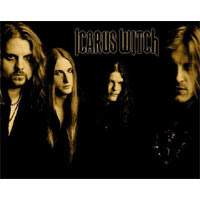
Guitarist Quinn Lukas has announced he's quitting heavy metal band Icarus Witch to become a funeral director.
A statement from the Pennsylvania rockers' says Quinn will leave the band on September 17 following his last ever live show in their native state.
Quinn had already started training in mortuary science before joining Icarus Witch but will now finish his studies.
The statement reads: "When Quinn joined the band in 2006, he put his mortuary science schooling on hold.
“Now Quinn's going back to school to become a funeral director, and Icarus Witch will enter the next chapter in our twisted tale as we prepare to release our fourth CD in time for a full U.S. tour this winter."
Icarus Witch formed in 2004 and despite numerous line-up changes have released two cult albums – 2005's Capture The Magic and 2007's Songs For The Lost.

Guitarist Quinn Lukas has announced he's quitting heavy metal band Icarus Witch to become a funeral director.
A statement from the Pennsylvania rockers' says Quinn will leave the band on September 17 following his last ever live show in their native state.
Quinn had already started training in mortuary science before joining Icarus Witch but will now finish his studies.
The statement reads: "When Quinn joined the band in 2006, he put his mortuary science schooling on hold.
“Now Quinn's going back to school to become a funeral director, and Icarus Witch will enter the next chapter in our twisted tale as we prepare to release our fourth CD in time for a full U.S. tour this winter."
Icarus Witch formed in 2004 and despite numerous line-up changes have released two cult albums – 2005's Capture The Magic and 2007's Songs For The Lost.
Subscribe to:
Posts (Atom)

 Posts
Posts


